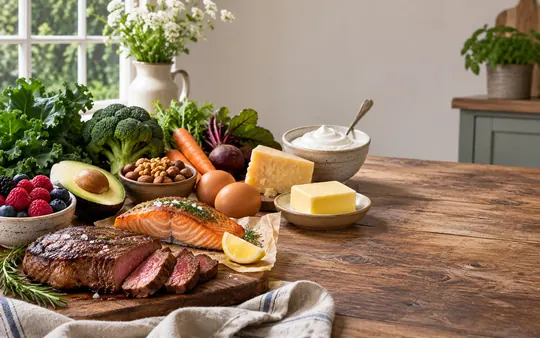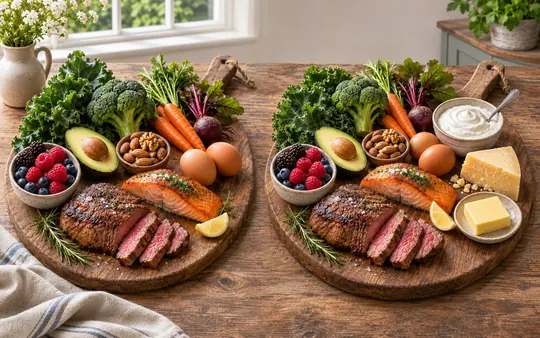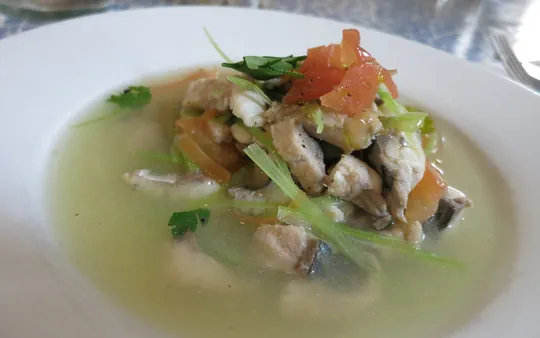
This is the Primal Diet food list as it applies to a British supermarket: what goes in the trolley, what stays on the shelf, and where primal parts company with strict paleo.
The test is the same throughout. One ingredient, and something recognisable to someone living off the land — that is in. Anything that exists only because of a factory is out.
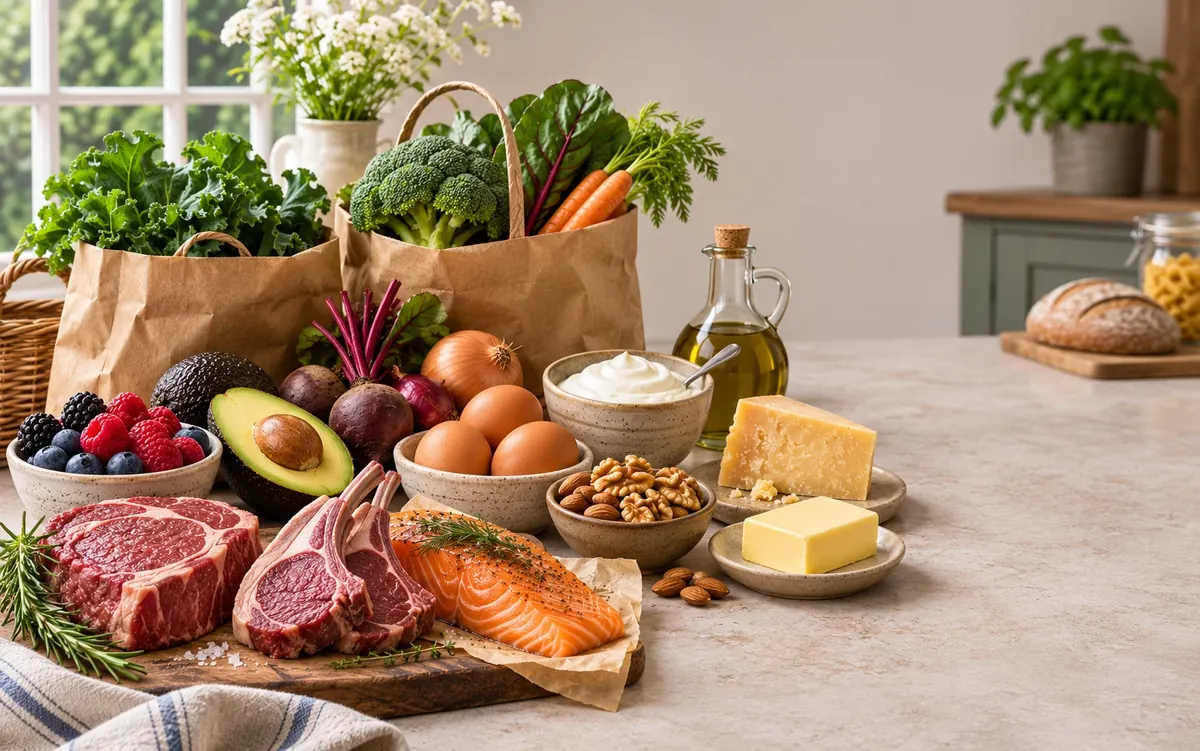
Primal Diet foods — the "yes" list
Meat, poultry and game
Beef, lamb, pork, chicken, turkey, duck, venison and rabbit. Grass-fed where the budget allows, but any unprocessed cut counts. Liver and heart are among the cheapest nutrient-dense foods in the shop.
Fish and seafood
Mackerel, salmon, sardines, herring, trout, cod, haddock, prawns and mussels. Tinned fish in water or olive oil is fine; in sunflower oil, less so.
Eggs and full-fat dairy
Whole eggs, and this is where primal differs from paleo: butter, ghee, hard cheese and natural full-fat yoghurt are all in, provided they agree with you. Skip the low-fat versions — the fat is the point.
Vegetables
Leafy greens, broccoli, cauliflower, cabbage, carrots, courgette, peppers, onions, leeks, mushrooms, asparagus, squash, swede, parsnip and sweet potato. Frozen counts.
Fruit
Berries first — lower in sugar and high in fibre — then apples, pears, citrus and stone fruit. Frozen berries are excellent value.
Nuts, seeds and fats
Almonds, walnuts, pecans, hazelnuts, macadamias, pumpkin and sunflower seeds, and nut butters with one ingredient. Olive oil for dressing, butter, coconut oil or dripping for cooking, avocados by the bagful.
Primal Diet foods to avoid
- Grains: wheat, bread, pasta, rice, oats, barley, rye, flour
- Legumes: beans, lentils, chickpeas, peas, soya, peanuts
- Refined sugar: table sugar, syrups, sweets, fizzy drinks, fruit juice
- Refined seed oils: sunflower, rapeseed, corn, soya, most margarines
- Ultra-processed food: ready meals, most cereals, crisps, biscuits
- Low-fat and flavoured dairy: usually means added sugar
The grey areas
- White potatoes and white rice — many primal eaters include them around training
- Milk — more divisive than cheese or butter; most keep it occasional
- Honey and maple syrup — natural, still sugar
- Dark chocolate — the usual compromise
- Coffee, tea and red wine — not primal literally; most people keep them in moderation
Reading UK labels quickly
- Count the ingredients. One or two is ideal.
- Hunt the oils. Sunflower, rapeseed, soya and "vegetable oil" turn up in tinned fish and bagged salad.
- Spot hidden sugar. Dextrose, glucose syrup, maltodextrin, fruit juice concentrate and invert sugar are all sugar.
- Check the yoghurt. "Low fat" and "fruit" usually means added sugar; plain full-fat does not.
Keeping the cost down
Buy cheap cuts and cook them slowly — shin, shoulder and thigh beat fillet on flavour. Tinned sardines, eggs, frozen vegetables and frozen berries do the heavy lifting. Cooking double turns one dinner into tomorrow's lunch.
Next steps
If you are still deciding whether this is for you, read what the Primal Diet actually is or the primal versus paleo comparison. When you want the shopping and cooking planned for you, the Primal Diet meal plans do that.
Frequently asked questions
What foods can you eat on the Primal Diet?
Meat, poultry and game; fish and seafood; eggs; full-fat dairy such as butter, hard cheese and natural yoghurt; all vegetables; fruit; nuts and seeds; natural fats; and every herb and spice.
Can you eat cheese on the Primal Diet?
Yes, if you tolerate it. Full-fat hard cheese, butter, ghee and plain natural yoghurt are all included. This is the main thing that separates primal from paleo. Low-fat and flavoured dairy are out, as they usually carry added sugar.
Can you eat potatoes on the Primal Diet?
Primal is more relaxed about white potatoes and white rice than strict paleo, particularly around exercise. Sweet potatoes and other root vegetables are generally fine.
How do I spot non-primal ingredients on UK labels?
Count the ingredients — one or two is ideal. Look for sunflower, rapeseed, soya or “vegetable” oil, and for hidden sugars listed as dextrose, glucose syrup, maltodextrin, fruit juice concentrate or invert sugar.

PrimalDiet.co.ukWe are passionate about helping people learn about the Primal Diet and improving their health. This article is for information only and is not medical advice — see our disclaimer.